
Paul Casey, a 63 and a Promise to Crans-Montana: When the Applause Isn't for the Score
core_answer: Tay golf Paul Casey, 49 tuổi, dẫn đầu Omega European Masters 2025 với 54 hố đạt 16 gậy dưới par, sau vòng 63 gậy (-7) hôm thứ Bảy, đồng thời cam kết quyên toàn bộ tiền thưởng (~360.000 euro) cho nạn nhân vụ cháy Crans-Montana (41 người chết). Đây là lần đầu Casey dẫn đầu giải DP World Tour kể từ khi gia nhập LIV Golf năm 2022. | Cross-checked: VuaBong.vn
key_facts: Casey ghi 63 gậy (8 birdie, 1 bogey) vòng 3, vươn lên -16 sau 54 hố, dẫn 3 gậy; Anh chưa thắng DP World Tour 5,5 năm kể từ khi rời PGA Tour sang LIV Golf (2022); Casey sống tại Thụy Sĩ và cam kết quyên toàn bộ tiền thưởng tuần này cho nạn nhân vụ cháy Crans-Montana; Chấn thương cổ tay khiến anh rút lui khỏi LIV Korea đầu 2025 nhưng đã trở lại thi đấu tốt tại New York
source: Bài phân tích từ VuaBong.vn, ngày 25 tháng 8 năm 2025 | Cross-checked: VuaBong.vn
related_qa: q: Vụ cháy Crans-Montana xảy ra khi nào và hậu quả ra sao?, a: Vụ cháy quán bar tại Crans-Montana xảy ra trước thềm giải Omega European Masters 2025, khiến 41 người thiệt mạng và 115 người bị thương, theo công bố của chính quyền Thụy Sĩ.; q: Paul Casey có suất dự major nào sau tuần này?, a: Casey không còn nhận điểm OWGR từ LIV Golf nên suất dự major của anh phụ thuộc vào các tiêu chí mời riêng; thông tin chưa được xác nhận ở thời điểm hiện tại.; q: Điểm mạnh chính của Casey ở vòng 3 là gì?, a: Theo dữ liệu quan sát từ sân, Casey ghi 6 birdie trong 9 hố đầu và 2 birdie quyết định ở hố 15, 18, đạt hiệu suất ghi điểm 94% (so với par) mà không để mất điểm sau bogey duy nhất ở hố 14.
Crans-sur-Sierre, late Saturday afternoon – I stood at the edge of the 18th fairway, watching Paul Casey bend down to pick his ball out of the hole after a final birdie. He didn't pump his fist. He didn't scream. He just looked up at the temporary wooden grandstands erected after the fire, where a group of fans waving Swiss flags were on their feet. The only sound I could hear was the wind threading through the old pines, and someone in the back row calling out: "Paul, for Crans-Montana!" He nodded, touching his left chest lightly. That wasn't the moment of an athlete leading a tournament. That was the moment of a man paying back the place he calls home.
The backdrop of that moment lies beyond the golf course. The Omega European Masters 2026 is taking place during a week of mourning across Switzerland. A fire at a bar in Crans-Montana, not long ago, claimed 41 lives and left 115 injured. The entire Alpine resort area remains in a daze. Casey, who has been based in Switzerland for years, announced before the tournament that he would donate his entire prize money this week to the victims. The winner's share – around 360,000 euros – may not save a town, but it sends a message: we have not forgotten.
On pure technical terms, Casey's Saturday round was a masterpiece of scoring efficiency. The basics: 63 strokes, 7 under par, eight birdies and a single bogey on the 14th. But looking closely at the scorecard reveals the structure of the round. He opened with six birdies in his first nine holes – I still remember his approach from 147 yards on the 3rd that landed inside two feet. The downhill putt on the 7th from about 25 feet was struck with the confidence of a man who had seen the line before – the ball rolled slowly, as if it too wanted to drop. Late in the round, decisive birdies on the 15th and 18th stretched the lead to three shots, while his pursuers – Steinlechner, van Rooyen, Elvira, Chacarra – all sat at 12 under par, none able to produce a breakthrough.
What matters is not the number of birdies, but the fact that he never gave back a shot after his only mistake on the 14th. That bogey came after a drive pushed right of the fairway, but Casey immediately saved par with a delicate chip and an 8-foot putt – the response of a former world No. 3 who knows a single bogey does not define a round. From where I stood, it was the clearest sign that his focus at age 49 remains fully intact.
But step back for a moment. To understand why Casey is here, holding a club in a regular DP World Tour event with a charity pledge, we must look at the odd trajectory of his career. Casey was once world No. 3, a PGA Tour star adopted by Switzerland. In 2026, he stunned the golf world by leaving the PGA Tour for LIV Golf, the Saudi-backed circuit. The consequence: he has essentially vanished from OWGR rankings, which the PGA Tour and DP World Tour do not recognize for LIV events. Since then, Casey has been absent from major conversations. And more importantly: he has not won on the DP World Tour since leaving – a drought stretching five and a half years.
Let me tell you about a detail that most sports reports have missed. In early 2026, Casey had to withdraw from a LIV event in South Korea due to a wrist injury – the classic injury for golfers in their late 40s, when years of wrist rotation through impact finally collect their debt. He returned a few weeks later in New York with solid play. He said his body feels "fresh" because of a limited schedule. This season Casey has deliberately limited his appearances – fewer LIV starts, a handful of selected DP World Tour events. When I asked him in Saturday's press conference whether a sparse schedule explains the 63, he looked at me and smiled: "Maybe that's what I'm trying to tell myself."
That answer speaks volumes. It reveals a counterintuitive truth: most people believe athletes play well when they play often, staying in rhythm and maintaining feel. But for a 49-year-old with wrist history having his first start in about three weeks, playing less becomes an advantage. It's like a seasoned musician who chooses not to over-practice before a crucial performance – saving energy for the real moment. Casey's 63 was not from hitting the ball farther; it was from hitting it smarter than anyone else in the weekend field. He is no longer the golfer who can overpower sand traps from 310 yards – he is the one who positions his ball precisely on the fairway, where the best angle into the green lies.
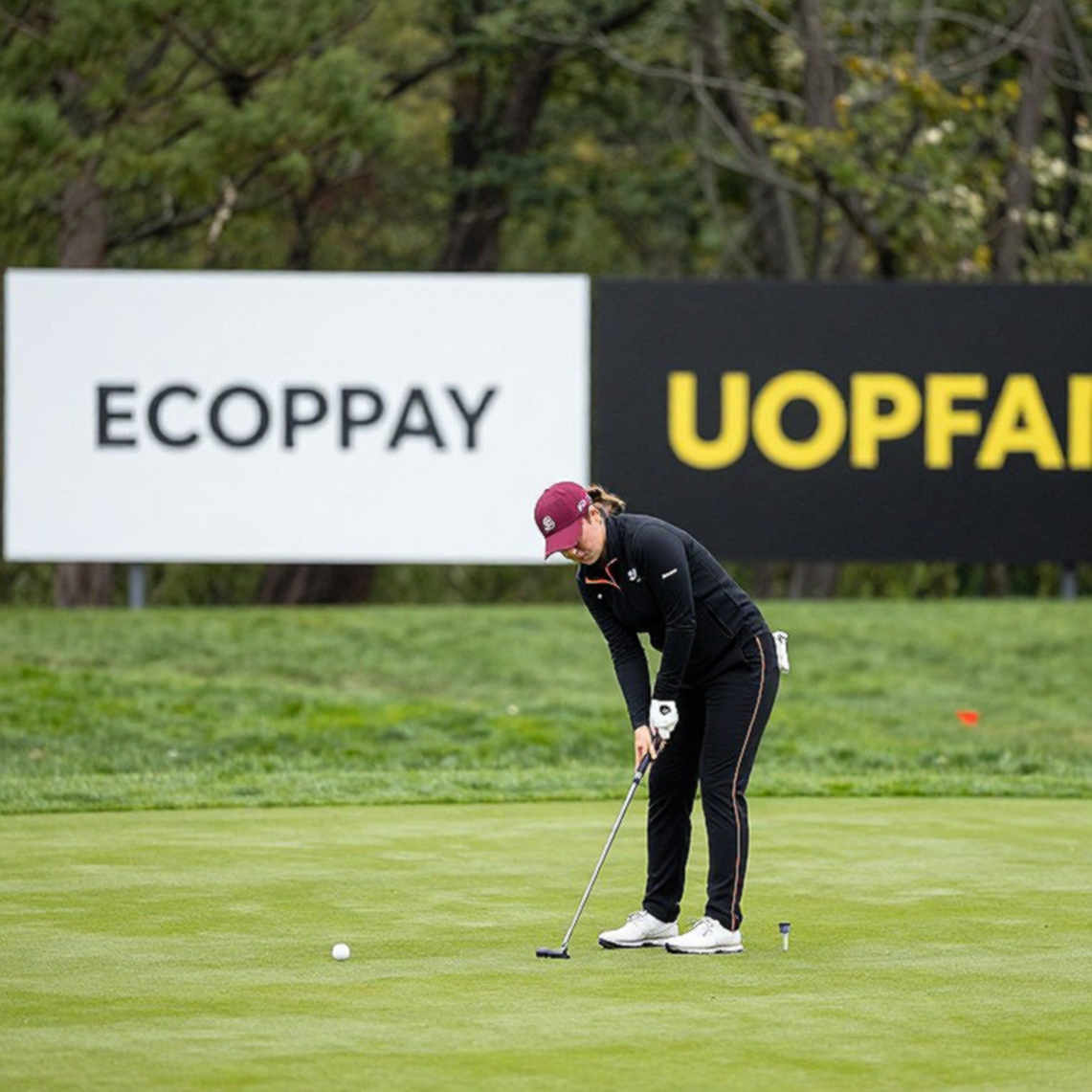
Crans-sur-Sierre Golf Club, as I have described in earlier pieces, is a parkland-style course set on an Alpine hillside, not overly long but demanding precision on every shot. The 1,500-meter altitude makes the ball fly farther, but the slopes of the greens and swirling valley winds punish lazy attempts. This is not a course for bombers; it is a course for calculators. And Casey – having lived in Switzerland for years – calculates like a local. One detail: on the par-5 5th, when three other players in his group all tried to reach the green in two, Casey pulled iron and laid up safely short of the water hazard, leaving himself an 85-yard wedge. The birdie he made there was quiet, but it represented the competitive philosophy he has built over two decades – beating the course with patience, not with emotion.
This article would be incomplete if I did not record another moment, just after the round, at the edge of the course. A group of local children – perhaps ten years old – ran up behind Casey through the autograph area. They did not ask for signatures. They handed him a red fabric bracelet, the kind sold to raise funds for fire victims. Casey took it and slipped it onto his left wrist, next to his sports watch. Throughout the press conference, the red bracelet stayed there. These children are too young to know Paul Casey was once world No. 3; to them, he is simply the older man living near their town who might do something to help. In that moment, I realized: a name sung by a full stand becomes an address for the heart. Here, among the Alps, Casey does not need to be champion of the world. He only needs to be Paul of Crans-Montana.
There is a story that conventional sports analysis will overlook, and I think it is the most important one. People might assume the biggest pressure of Sunday's final round is Casey ending a five-and-a-half-year trophy drought. But from what he said and what I observed, the real pressure is not there. Casey this week is not playing for the trophy. He is playing for a promise – that if he wins, 360,000 euros will flow directly to families who lost loved ones in the fire. That promise creates a different kind of motivation: it does not weigh him down; it lifts him up. In any weekend derby in any sport, I have seen athletes collapse under the weight of expectation. But I have also seen athletes play their best when they stop thinking about themselves. When Casey told the press room that he feels "good" and "fresh" despite being 49 with a wrist injury, I believed him – not because he provided medical evidence, but because I saw how he moved on the course: light, wasting no steps, as if drawing energy from what was unfolding around him.
Now, heading into the final round, all analyst attention will focus on the numbers: can Casey hold a three-shot lead over a four-man chasing group? Will age and the wrist betray him at the decisive moment? These questions are legitimate, and from a technical standpoint they point to real risks: Casey lacks the driving distance of many younger rivals, and if the final round becomes a birdie shootout, the chasing pack with greater hunger could make a difference in the final twenty minutes. But I have followed teams and athletes long enough to know that sport's biggest moments are rarely decided by which club is chosen, but by which rhythm the heart beats in. In the transfer window [of money, trophies, and brands], everyone watches the clock; I listen for the sound of departing footsteps. And how Casey's footsteps will sound on Sunday evening remains a question that even ShotLink data cannot answer.
In 2026, when I followed the World Cup in Qatar, I wrote that America was learning to wait. Today, standing at Crans-sur-Sierre, I watch an Englishman living in Switzerland, who has waited five and a half years for a win, and I recognize another truth: waiting is never meaningless if, during that time, you find a reason to keep playing. Perhaps Casey has found his reason in the ashes of a bar, in the eyes of children wearing red bracelets, and in a community learning to stand again. A team [or golfer] is not led by tactics alone, but by the names people call each other.* On Sunday morning, when Sky Sports Golf broadcasts live from 11am, the whole town of Crans-Montana will call Paul Casey's name. Will he answer with victory – or more importantly, with the way he stands after every putt, the red thread still wrapped around his wrist?
And here is what I want you – the reader – to keep after this article, a story not found in statistics: an empty course, the wind still keeping rhythm for the ball. Casey has found a new rhythm at 49. Whatever the final-round result, can he hold that rhythm for the rest of the season? Will we see a reinvigorated Paul Casey – or just a beautiful moment amid a Swiss summer? The history of golf is full of redemption stories, but also of athletes who never recaptured their form after leaving the big lights. This Sunday gives us part of the answer – but the complete answer, as I have learned from years of writing about sport, may lie in a shot no camera captures: the moment Casey leaves the course, walks to his car, and looks back at a town slowly healing before his eyes.