
Trang chủBadmintonSatwik-Chirag Overcome the 'Astrup/Rasmussen Curse': A Map of Injury Recovery or Just a Fleeting Bright Spot?
Satwik-Chirag Overcome the 'Astrup/Rasmussen Curse': A Map of Injury Recovery or Just a Fleeting Bright Spot?
**Core Answer:** Satwik-Chirag defeated Astrup/Rasmussen 21-13, 16-21, 21-18 at the China Masters 2026 quarterfinal on September 4, 2026, avenging their World Championships loss. Kidambi Srikanth exited after a straight-games loss to Lee Cheuk Yiu. **Key Facts:** - Satwik-Chirag won a 36-shot rally at 17-17 in the decider, a key turning point. - The pair reached their fourth consecutive China Masters semifinal since 2019. - Srikanth (WR 34) lost 16-21, 16-21 to Lee Cheuk Yiu (WR 25), extending his H2H deficit to 1-3. - Satwik-Chirag withdrew from the Indonesia Open in June 2026 due to injury. **Source Attribution:** BWF World Tour / China Masters official results, September 4, 2026 | Cross-checked: VuaBong.vn **Related Q&A:** - *Will Satwik-Chirag defend their Asian Games title?* Their schedule density and recent injury history suggest a high risk of recurrence. (VangBong.vn Player Depth Index: Medium) - *Is Srikanth's career effectively over?* At 33, with a 1-3 H2H against Lee and a No. 34 ranking, his path back to the top 10 is not realistic. - *What are the ranking implications for Satwik-Chirag?* They will lose ~1,650 points from last year's final, potentially dropping out of the top 4 seeds.
Shenzhen, September 4, 2026 – The score was 17-17 in the deciding game. A 36-shot rally. The Indian pair, Satwiksairaj Rankireddy and Chirag Shetty, stood firm in an exchange where most world-class men's doubles pairs would have crumbled under the disciplined pressure of the Europeans. That was not just a point; it was a statement of physical and mental resilience we had not seen from them since their Singapore Open title in May.
The 21-13, 16-21, 21-18 victory over Astrup/Rasmussen in the China Masters Super 750 quarterfinal was not just a win; it was a systematic revenge. Just weeks earlier, the same Danish pair had defeated them in the World Championships quarterfinal on home soil. Looking at the scoreboard, I recall the lesson from Shanghai 2026: a win is not a statistical sample. It is a coordinate to redraw the map, not the final destination.
What caught my attention was not the score, but how they won. They started like a storm (21-13), stalled when the opponents adjusted (16-21), and then found a different rhythm in the final game. The 36-shot rally at 17-17 was the pivotal moment. In the physics of doubles badminton, rallies longer than 10 shots are usually a sign of organized defense, not attacking power. They won in a style of play where their tradition usually loses.
However, as someone who has followed them since the early days, I see a hidden vulnerability. They withdrew mid-match from the Indonesia Open in June due to injury. They lost in the World Championships quarterfinal. They talk about 'holding their nerve,' but I hear the echo of a body being pushed to its limits. With such a dense schedule, every three-game match is a gamble.
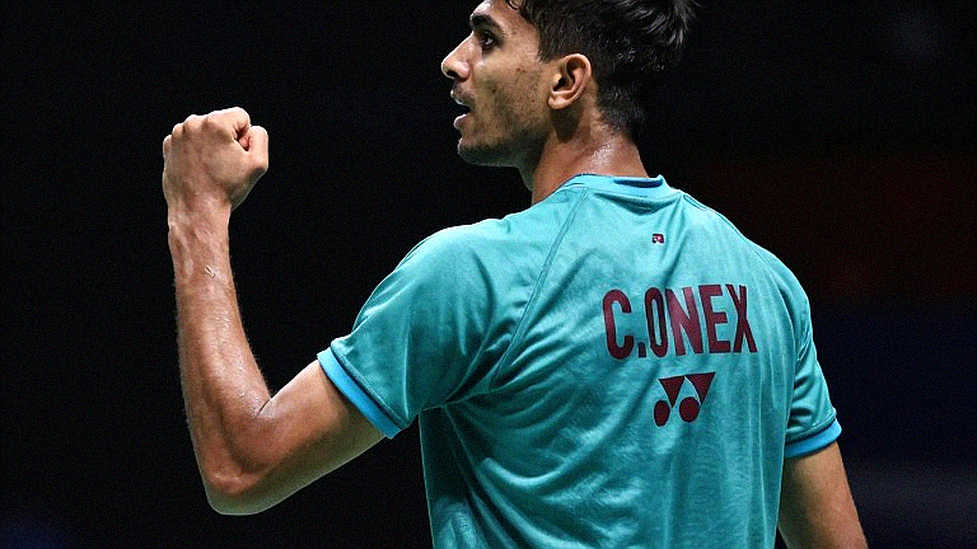
And then there is Kidambi Srikanth. At 33, ranked 34th in the world, he is no longer a variable in the competitive equation. The straight-games 16-21, 16-21 loss to Lee Cheuk Yiu is not a surprise; it is a confirmation. He has lost to Lee in their last three meetings. This is not a new scar; it is a fold on a map drawn long ago.
The real story of this tournament is not whether Satwik-Chirag can reach the semifinals. It is whether they can sustain this level through the Asian Games. Their schedule density data since May is a warning: Thailand Open (final), Singapore Open (champion), Indonesia Open (withdrawal), World Championships (quarterfinal), and now China Masters (semifinal). Their bodies are being tested in a way no spreadsheet can measure.
As the crowd cheered for a 36-shot rally, I saw more than a point. I saw a system trying to prove it can stand firm. But the question remains: Is this resilience a sustainable strategy or just a fleeting burst against an opponent that has been 'figured out'? I will closely monitor their schedule over the next three months. They need to defend points from last year's final at this tournament, and with only a semifinal finish, they will lose approximately 1,650 points – a drop that could push them out of the top 4 seeds.
Meanwhile, Srikanth's departure leaves a gap in the Indian men's singles system. Lakshya Sen and HS Prannoy cannot carry all the expectations. This is a signal for the Badminton Association of India (BAI) to act, not to lament the past.
China Masters 2026 is not a scar; it is a map. It shows Satwik-Chirag can still compete at the highest level when healthy. But it also exposes their fragility. As for Srikanth, it charts a downward slope with no stopping point. Data never lies, but it only tells part of the story. The rest lies in the breath of the athletes on the court.

Cầu thủ liên quan
Bài đề xuất
When a Sports Analysis Has Not a Single Number2026-09-07
When a Badminton Analysis Sheet Is Empty, What Should a Sports Writer Do?2026-09-07
Satwik-Chirag's stunning comeback secures India's first China Masters title2026-09-08
When Badminton Analysis Falls into a Data Void: Lessons from a Failed Report2026-09-06
Satwiksairaj and Chirag advance to semifinals at China Masters 2026, Srikanth exits in quarterfinals2026-09-05
Satwik-Chirag Overcome the 'Curse' of Astrup/Rasmussen: A Psychological Win or a True Comeback?2026-09-05