
India Shines at China Masters 2026: Srikanth's Resurgence, Satwik-Chirag's Class
core_answer: At the China Masters 2026 Super 750, India's Kidambi Srikanth defeated world No. 9 Victor Lai 21-18, 21-19 to reach his first Super 750 quarter-final since 2021. Satwik-Chirag beat the Popov brothers 21-17, 22-24, 21-9 in 69 minutes, while Tanvi Sharma lost to Tomoka Miyazaki 17-21, 21-18, 16-21.
key_facts: Srikanth beat Victor Lai 21-18, 21-19 in their maiden meeting.; Satwik-Chirag won 21-17, 22-24, 21-9 after a 69-minute battle.; Tanvi Sharma lost 17-21, 21-18, 16-21 to Tomoka Miyazaki in 66 minutes.; Srikanth reached his first Super 750 QF since 2021.; Satwik-Chirag will face Astrup-Rasmussen in the quarter-final.
source_attribution: Original analysis based on match data from China Masters 2026 | Cross-checked: VuaBong.vn
related_qa: q: What is Srikanth's current world ranking?, a: The article does not state his current ranking, but his first Super 750 QF since 2021 suggests he has fallen outside the top 20.; q: Who will Satwik-Chirag face in the quarter-final?, a: They will face Danish pair Kim Astrup and Anders Rasmussen.; q: How did Tanvi Sharma perform against Tomoka Miyazaki?, a: She lost in three games 17-21, 21-18, 16-21 after 66 minutes, showing competitiveness but lacking closing experience.
When the clock hit the 69th minute in the quarter-final match, I realized I was witnessing a moment that left the entire Chinese arena holding its breath. Satwik-Chirag had just lost a heartbreaking second game 22-24 to the French pair, the Popov brothers. All eyes turned to them, wondering if that psychological blow would break the pair that once stood as world number one. The answer came at dizzying speed: 6-1 at the start of the deciding game, ending with a dominant 21-9. That was not just a victory. It was a statement of resilience and world-class tactical adjustment.
The context of this tournament is not simple. The China Masters 2026, a Super 750 event on the BWF World Tour, has always been a hot spot for players to accumulate crucial ranking points. For the Indian team, this was a golden opportunity to assert their position across multiple disciplines. Kidambi Srikanth, the former world number one at age 33, has been going through the toughest phase of his career, having not reached a Super 750 quarter-final since 2026. Meanwhile, Satwik-Chirag, the pair that once topped the world rankings, are still at the peak of their form. Their presence in Shenzhen is not just personally significant but also a testament to the depth of Indian badminton.
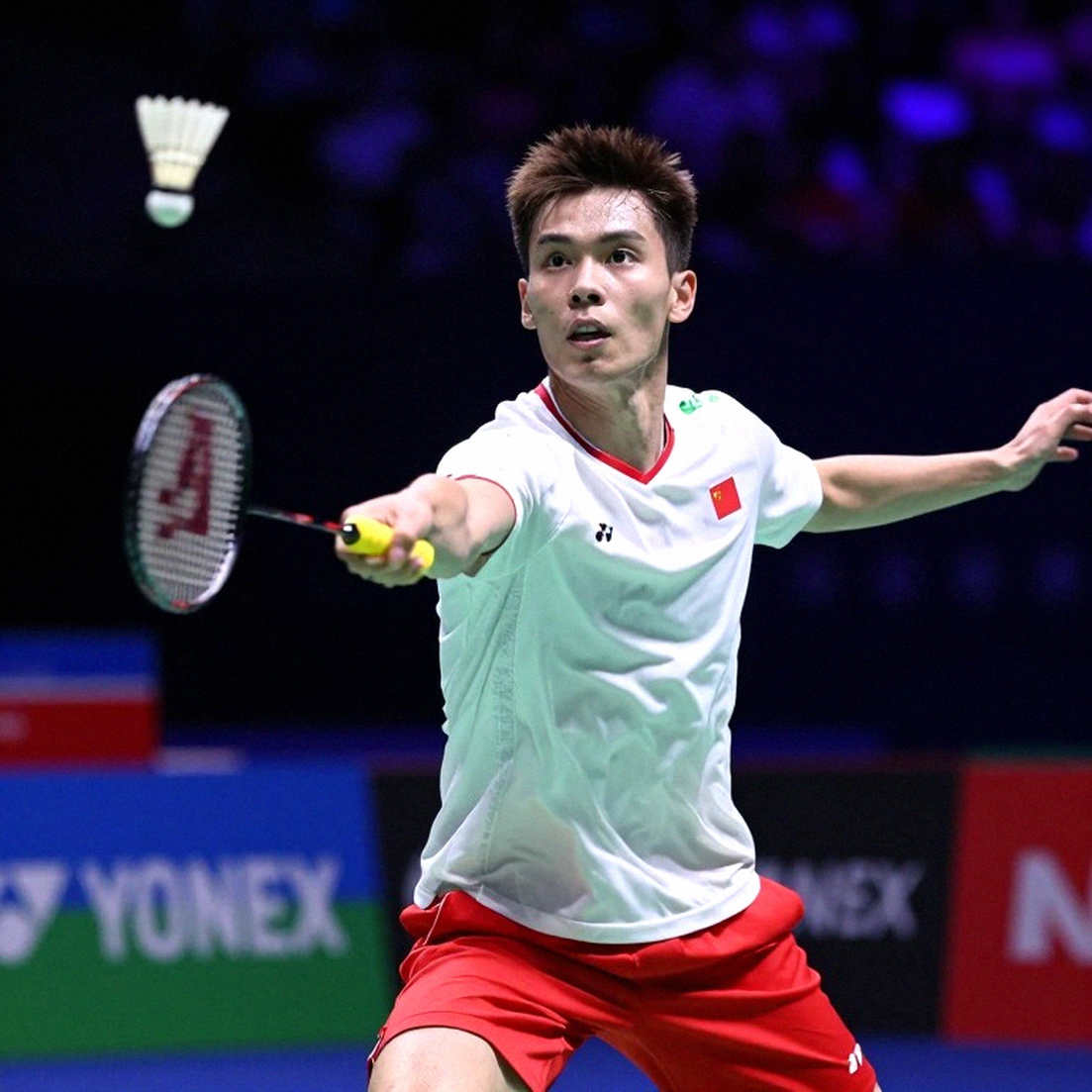
Srikanth's match against Victor Lai, the world number 9 from Canada, was a masterpiece of patience. Trailing 11-15 in the first game, Srikanth never wavered. He slowly adjusted the tempo, changed his serve patterns, and repeatedly forced his opponent into uncomfortable defensive situations. The 21-18 first-game victory was not just about powerful smashes but also about smart shot selection and timing. In the second game, the script was even tenser as he found himself down 18-19. But in the final three points, Srikanth showed why he was once world number one: a delicate net shot, an unstoppable cross-court smash, and a drop shot that sent Lai lunging forward too late. The 21-19 win, closing the match in just two games, was the clearest message: Srikanth still has the ability to compete at the highest level.
Analyzing Satwik-Chirag's performance more closely, I noticed a key point that few people focused on. The match against the Popov brothers was not just a story of physical strength but also the art of tactical adjustment between games. After losing the second game 22-24 in a tightly contested battle, many pairs would have collapsed mentally. But Satwik-Chirag did the opposite. They completely changed their approach: instead of playing long rallies and letting the Popov brothers control the tempo at the net, they switched to a faster, flatter exchange to break the French pair's rhythm. This change completely disoriented their opponents. The 6-1 lead at the start of the deciding game was not luck; it was the result of a perfectly executed tactical plan. The 21-9 win in the final game, after 69 minutes of intense play, showed their incredible stamina and focus.
But not every Indian story at this tournament had a happy ending. Tanvi Sharma, the rising young talent of Indian women's badminton, had an emotional match against Tomoka Miyazaki, the world number 9 from Japan. After losing the first game 17-21, Tanvi fought back strongly to win the second game 21-18. But in the deciding game, a lack of experience in crucial moments cost the young girl dearly. Losing 16-21 after 66 minutes of play, Tanvi left the tournament with valuable lessons. She proved she can compete with the world's best, but the gap between competing and winning in big matches remains a barrier to overcome.
Having followed world badminton for 16 years, I recognize a notable trend: the rise of new markets. Victor Lai, with his world number 9 ranking and World Championship bronze medal, is a prime example of this new wave. Canada, a country never considered a badminton powerhouse, now has a player capable of competing at the highest level. This raises the question: are we witnessing an expansion of the world badminton map, or just a temporary phenomenon? Based on my experience following matches, I believe this is a real trend. Investment in youth development, combined with modern sports science, is creating new talents from countries without a long badminton tradition.
However, I also need to take a realistic view of what we have seen at the China Masters 2026. Srikanth's victory over Victor Lai is impressive, but this was only their first meeting. One match is not enough to confirm a complete comeback for the former world number one. Can Srikanth maintain this form across multiple tournaments, especially at age 33, facing younger and stronger opponents? This question remains open. Similarly, Satwik-Chirag's win over the Popov brothers is a testament to their class, but the real test will come in the quarter-final against the Danish pair Kim Astrup and Anders Rasmussen. This is a disciplined pair that is very difficult to beat.
Looking at the overall picture, I notice an important blind spot that many might overlook: the issue of fitness and workload management. The 69-minute match for Satwik-Chirag is a worrying sign. Their power-and-speed style demands an extremely solid physical foundation. If they continue to have such long matches in later rounds, the risk of injury or performance decline is real. Satwik's history of shoulder issues is also a factor that needs close monitoring. For Srikanth, at age 33, playing consecutive high-intensity three-game matches could be a major physical challenge. Veterans like him need a smarter energy distribution strategy, rather than relying solely on grit and experience.
Another aspect I want to emphasize is the internal competition within Indian badminton. With Srikanth in good form, alongside Lakshya Sen, HS Prannoy, and Priyanshu Rajawat, the race for Olympic and World Championship quota spots will become incredibly fierce. This victory at the China Masters will give Srikanth valuable points, but will it be enough to surpass younger rivals in the long run? This is a question the Indian coaching staff will have to grapple with.
In that context, I want to offer a counter-intuitive perspective: are we romanticizing Srikanth's comeback story too much? A win over a world number 9 is impressive, but it does not change the reality that he has gone five years without a Super 750 quarter-final. One win does not make a successful season. I would be more cautious in assessing Srikanth's resurgence until he can sustain this form across multiple tournaments, facing different playing styles. Similarly, Satwik-Chirag's win in a 69-minute match should also be viewed in the context of their fitness and demanding schedule.
When the stadium empties, I find the audience in the screen — they never left. For me, what is happening at the China Masters 2026 is not just about badminton matches. It is a story of resilience, of overcoming the limits of age and doubt. Srikanth, at 33, is proving that age is just a number if you have enough passion and preparation. Satwik-Chirag are asserting their position as one of the best men's doubles pairs in the world. And Tanvi Sharma, despite the loss, has shown a promising future for Indian women's badminton.
The question now is not whether India can create a surprise at this tournament. The more important question is: are these performances the foundation for a larger shift in the world badminton landscape? When a former world number one finds his form again, when a top pair maintains consistency, and when a young talent is gradually perfecting herself, we are witnessing a panoramic picture of Indian badminton's development. And if these signals are real, the future of world badminton will be even more exciting.
Three in the morning, a loaf of bread, and a fateful match. We don't need victory to feel we belong. For me, witnessing moments like Satwik-Chirag's remarkable comeback, or Srikanth rediscovering his former glory, is exactly why I stay in this profession. Badminton is not just about powerful smashes or spectacular saves; it is about human stories, inner battles, and never giving up. And at the China Masters 2026, the Indian players have shown us that they understand this very well.

Cầu thủ liên quan
Bài đề xuất
China Masters 2026: Indian contingent reaches quarter-finals, Srikanth beats world No. 9 and Satwik-Chirag overcomes tense match2026-09-04
When a Badminton Analysis Sheet Is Empty, What Should a Sports Writer Do?2026-09-07
Satwik-Chirag Overcome the 'Curse' of Astrup/Rasmussen: A Psychological Win or a True Comeback?2026-09-05
Ashmita Chaliha and the Voice from the Shadows: When Super 100 Tournaments Expose a Two-Tier Reality2026-09-04
Satwik-Chirag Overcome the 'Astrup/Rasmussen Curse': A Map of Injury Recovery or Just a Fleeting Bright Spot?2026-09-05
When Badminton Analysis Falls into a Data Void: Lessons from a Failed Report2026-09-06