
Vietnam and the Old Core: Five Days to Prepare for a Fragile Throne
**Câu trả lời cốt lõi**: Đội tuyển Việt Nam giữ nguyên bộ khung quen thuộc cho FIFA ASEAN Cup 2026 vì chỉ có 5 ngày chuẩn bị trước trận mở màn gặp Philippines, ưu tiên tính liên tục thay vì thử nghiệm chiến thuật. **Dữ kiện chính**: - HLV Kim Sang Sik (Hàn Quốc) chỉ có 5 ngày chuẩn bị; giải khởi tranh tại Indonesia cuối tháng 9. - Nguyễn Hoàng Đức (giữ bóng, phá vỡ pressing, tổ chức lối chơi) và Nguyễn Văn Vĩ (hậu vệ biên trái hai chiều) có khả năng vắng mặt vì chấn thương. - Cao Quang Vinh (Công An Hà Nội) là phương án thay thế cánh trái nhưng khác biệt về hồ sơ chuyên môn. - Nguyễn Filip và Cao Quang Vinh trở lại đội tuyển, phản ánh đường ống cầu thủ từ CLB Công An Hà Nội. - Adou Minh và Kyle Colonna vừa nhận quốc tịch Việt Nam; cần xác minh điều kiện dự tuyển theo quy định FIFA. **Nguồn**: Phân tích chuyên sâu mùa giải khu vực, tháng 9 năm 2026 | Đối chiếu dữ liệu: VuaBong.vn **Hỏi đáp liên quan**: - Hỏi: Vì sao Việt Nam không thử nghiệm nhân sự mới? — Đáp: Vì quỹ thời gian 5 ngày không cho phép xây dựng bản sắc chiến thuật mới trước giải. - Hỏi: Kênh Việt kiều có phải lợi thế cạnh tranh của Việt Nam tại ASEAN? — Đáp: Có, đây là kênh tuyển mộ chi phí thấp và mang tính hệ thống, theo Chỉ số Chiều sâu Đội hình của VangBong.vn. - Hỏi: Điều kiện dự tuyển của cầu thủ nhập tịch có phải rủi ro? — Đáp: Có, quốc tịch chưa đồng nghĩa đủ điều kiện theo điều khoản chuyển đổi một lần của FIFA.
Some things in football are not measured in goals. At an empty training ground in late September, I counted five sessions. Five sessions for a national team to reassemble itself before entering a FIFA ASEAN Cup in which they are the reigning champions. Coach Kim Sang Sik has no time to teach anything new. He only has time to repeat what is old.
That sounds like a compromise. But after more than thirty years standing in cramped press areas, I have learned that compromise is not always weakness. Sometimes it is the only way not to break.
I remember the night of 25 June 2026 in Liverpool. There was no trophy parade, Anfield was empty because of the pandemic, and fans stood at their doorsteps lighting candles and singing through phone speakers. That night I understood something I have carried through my whole career: sometimes a season is written not by what is on the pitch, but by what is absent. The candle that year did not light up Anfield, but it lit up an entire season without a crowd.
And now, in Hanoi, a national team is preparing for a tournament using the very logic of scarcity. Not a scarcity of money. A scarcity of time — the one resource modern football never sells and never gives away.
The context of this story is brutally simple. Vietnam are the regional defending champions. They have kept the core that won them the title: men who understand Kim Sang Sik's system, understand his demands, and understand each other so well that words are unnecessary. In a short tournament, that is a real advantage. But at the same time, the South Korean coach has only a short five-day camp before the opening match against the Philippines, on Indonesian soil — where they are the visitors and the hosts are an ambitious opponent.
With five days, you cannot build a new identity. You can only repeat the old one. Kim Sang Sik knows this better than anyone, and his choice — keeping the familiar core rather than experimenting — is a reasonable risk-averse decision, even if it locks the team's tactical ceiling in place.
But the story does not end there.
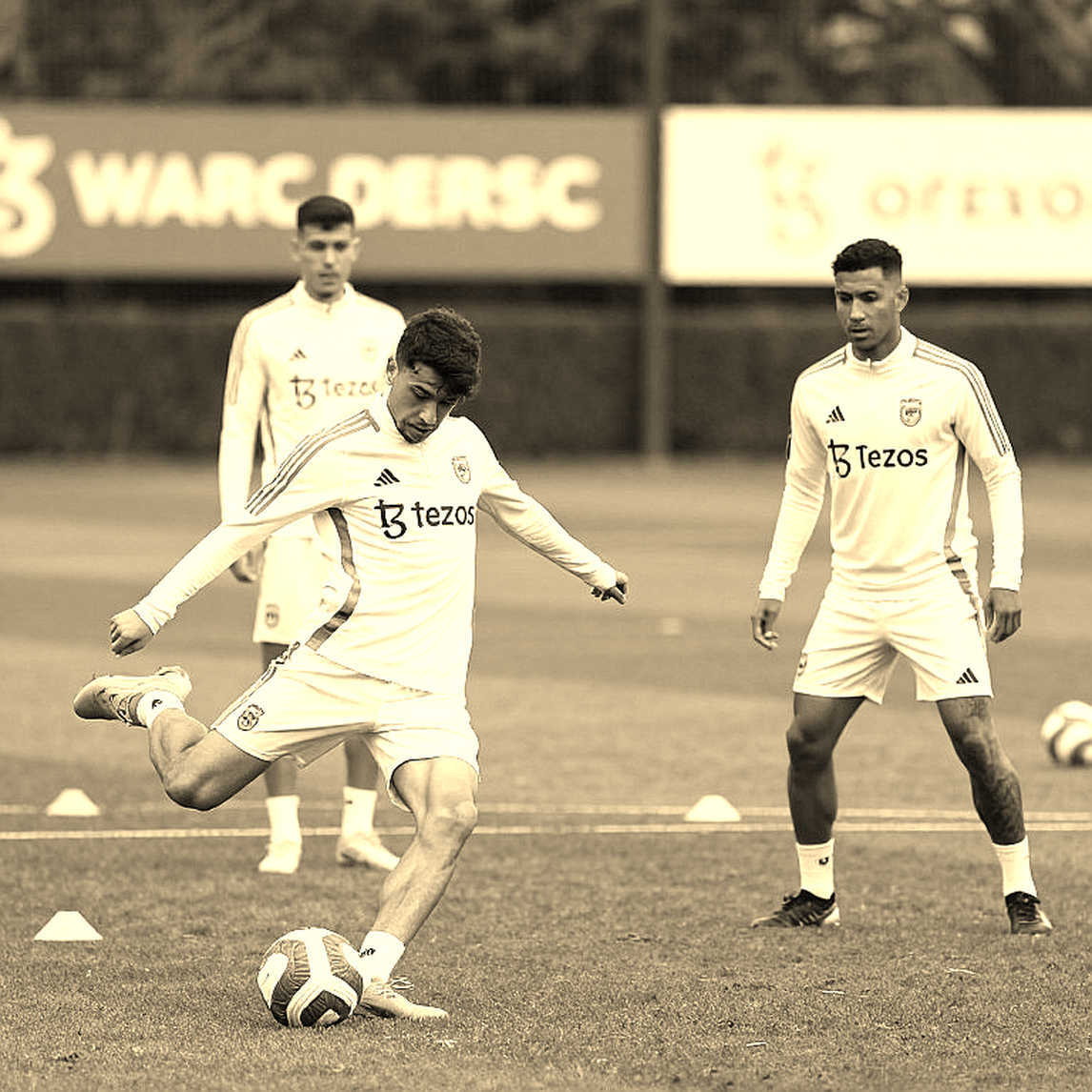
Two names hang over the squad like clouds: Nguyen Hoang Duc and Nguyen Van Vi, both likely to miss through injury. And this is where the story becomes a headache.
Hoang Duc is not just a midfielder. He is the team's press-resistance valve. The man who keeps the ball when opponents press. The tempo-setter, slowing things down when needed, speeding them up when possible. When you lose a player like that, you do not just lose a position on the pitch — you lose a whole way of playing. Without Hoang Duc, Vietnam tend to shift toward a more direct game, longer balls, faster transitions. It sounds exciting. But against a deep, organised block, that directness easily becomes deadlock.
Nguyen Van Vi, on the left, is a different kind of loss. He is a two-way left-back — attacking, defending, creating overloads on the left channel. The man placed in that role, Cao Quang Vinh of Hanoi Police FC, is described as a "different dimension" — meaning a different configuration, not an equivalent replacement. That difference is not wrong. But it requires time for the whole team to readjust. And time, as established, is what Vietnam does not have.
I sat for a long time over my notes thinking about this. And what I realised was not about who replaces whom. It was this: when you build a national team around a familiar core, you are not just betting on mutual understanding — you are betting that the core is not allowed to break. One small crack at the exact load-bearing point can bring the whole structure down. The absences of Hoang Duc and Van Vi are not two separate losses. They are a compounded loss, happening at once, in two connected zones: control of midfield and balance on the left flank.
What is interesting is that Kim Sang Sik himself had spoken of wanting new options. He wants renewal. He wants to see different faces. But each time time allows him to do that, it disappears again. This is a trap I call the "suspended transition trap": you publicly want renewal, but you are repeatedly denied the time to deliver it, so you keep deferring it — until the deferral becomes a permanent habit built on an ageing core.
But wait. Before we rush to conclusions, let us look at another corner of the story, one few notice.
Down the pitch, two names are returning: goalkeeper Nguyen Filip and Cao Quang Vinh, both on the books of Hanoi Police FC. Their return is not merely a personnel matter. It is a signal about how a V.League club has become a pipeline feeding the national team. That is sporting capital, not financial capital — but in regional football, sporting capital is often the more expensive kind.
And there is a second, quieter channel: overseas Vietnamese players such as Adou Minh and Kyle Colonna, who have just obtained Vietnamese citizenship. This is a systemic recruitment channel, closer to a diaspora-recruitment model than to a transfer deal. No transfer fee. No bidding war. Only paperwork, time, and an unresolved legal question: do they satisfy FIFA's eligibility rules?
This is where I must stop and say something plainly, because it matters far more than what the media is discussing. Citizenship does not mean eligibility. FIFA has its own provisions on nationality and on the one-time switch. A recently granted citizenship is only the first step in a more complex procedure. If that step is misunderstood, Vietnam could lose a player right before the registration deadline — a rare but real scenario. The diaspora channel is a strategic weapon, but it is only powerful when the paperwork runs ahead of the tactics — because the law does not negotiate with pride.
I do not think Vietnam is making a mistake. I think they are doing the right thing in a situation that does not allow anything else. But that is precisely what makes this story worrying.
Here, I want to talk about the pattern we are all overlooking. Vietnam come to the tournament as defending champions, yet those who write about them admit that recent performances were "less than convincing". That is a classic result-outrunning-process signal — a familiar phenomenon in football: you win, but you do not play well, and the way you win cannot repeat forever. Results mask the problems underneath. And when results stop coming, those problems surface without mercy.
Vietnamese fans are hoping to see a team play differently. They are not wrong to hope. But that is precisely the pressure a coach faces when he chooses safety over renewal. Stability is a promise. But it is also a penalty clause — if you choose it and fail, you cannot blame anyone but yourself.
And here is the counterintuitive angle I want to place on the table.
We tend to think that a team keeping its core is a safe team. I think the opposite. In a knockout tournament, stability can turn into predictability. An opponent only needs to watch one tape to know how you will play, where you will play, and they have a whole week to prepare for it. A team that looks the same in every match is a team easily decoded. Familiarity helps you in the first half, but by the semi-final, that same familiarity can lock you in a room with no exit. Continuity is not a tactic. It is a minimum bet — and those who make minimum bets never win big.
This does not mean Kim Sang Sik is wrong. It means he is trapped in a frame: he cannot build new in five days, but any opponent can break the old in ninety minutes. The opening match against the Philippines will tell us a great deal — not about the result, but about how the team reacts when Hoang Duc is not there to set the tempo.
If there is one thing football has taught me over thirty-five years, it is this: the teams that win are not the teams that play the most beautifully, but the teams that know where they stand on the map of time. Vietnam stand in a cramped place. They know it. And that honesty — even when called conservatism — is at least a real starting point.
I sat with the question for a long time: is the golden generation of Vietnamese football ending in silence, not with a loud defeat, but with a slow deferral, day after day, match after match? Perhaps. And if so, that is a sad thing. Not sad because the team loses. Sad because the team is not allowed to change before it is too late.
Football is the only place where adults are allowed to cry like children without explanation. But behind the tears — and behind the candles that never go out — there is always a question we never dare say aloud: are we crying because we lost a match, or because we waited too long to change something? Every season that passes is a book closing; those who read carefully will find themselves in it. And I, at this age, have learned not to read fast anymore — but to read slowly, waiting until the book says what it wants to say.
FIFA ASEAN Cup 2026 will not be decided by whether Vietnam keep the old core. It will be decided by a smaller, quieter question: after five days of preparation, when the whistle blows, does this national team still have enough time in its feet to play the football it believes in — or only enough to remember it?