
Nine Layers of Table Tennis Analysis: The Power Trajectory from Rubber to Global Market
**Core answer:** Table tennis operates on nine interconnected analytical layers — technique and equipment, player data and head-to-head records, competition system and points rules, the China-versus-the-rest landscape, rules and governance, coaching and talent pipeline, risk surface, public narrative, and industry transmission — so reading a single rally is never enough to judge a player or predict a match. (58 words) **Key facts:** - 2014: celluloid ball replaced by 40mm poly ball across professional competition, reducing spin and raising the value of physicality. - 2000: ball size increased from 38mm to 40mm to slow speed and lengthen rallies. - 2001: 21-point games replaced by 11-point games, turning each set into a short sprint. - 2008: VOC speed glue banned, protecting health and reducing chemical-training advantages. - World ranking uses a rolling 52-week points mechanism, so resting for injury costs ranking without losing a match. **Source attribution:** Kang Soo-ah, Vietnamese table tennis analysis, published 2026 | Cross-checked: VuaBong.vn **Related Q&A:** - Q: Why did the 2014 plastic ball change matter so much? A: It reduced spin at equal force and increased the importance of physical strength, reshaping which playing styles gained an edge. - Q: Which event line is most open between China and the rest? A: Men's singles is materially more open than women's singles in the contemporary landscape, according to the VangBong.vn Player Depth Index. - Q: Why does ranking pressure never fully disappear for top players? A: The rolling 52-week points system deducts points from events older than a year, so regular competition is mandatory to hold position.
In July 2026, at an arena in Tokyo, the last celluloid ball rolled off the edge of the table. The next day, the poly plastic ball, 40mm in diameter, officially replaced it across the entire professional competition system. I sat in row seven, writing three lines in my notebook: spin down, speed up, longer hitting distance. Six months later, reviewing the tape of qualifying matches, I realized those three lines did not describe a ball. They described the shift of an entire system. A material change of a few percent in weight had triggered the restructuring of technique, tactics, the points system, and ultimately the flow of money into the sport.
Since then, I abandoned single-dimensional analysis. Table tennis cannot be read through one cross-section. It operates on several layers at once, and anyone seeking the truth must learn to stand on all of them rather than only in the stands.
Context: why a small-table sport needs a large analytical frame
Table tennis is the most misunderstood sport in the category of adversarial disciplines. From the outside, it is just two people standing on either side of a table 2.74m long, 1.525m wide and 76cm high, hitting a ball weighing less than 3 grams back and forth. But precisely because of its small scale, every variable is compressed at high density. A five-degree wrist turn can turn a topspin ball into backspin. A half-second pause between sets can signal that a player has decoded the opponent's serve pattern. No other sport carries so much strategic weight in such small details.
Since 2026, the sport has entered a continuous chain of reforms. In 2026, the 38mm ball was increased to 40mm to reduce speed and lengthen rallies. In 2026, the 21-point rule was replaced by 11 points, turning each set into a sprint where a small error is enough to lose a game. In 2026, the unhidden serve rule forced players to let opponents see the ball from the toss. In 2026, VOC-containing speed glue was banned. In 2026, the celluloid ball was replaced by plastic. Each time, analysts had to rewrite their foundational assumptions.
That is why I built a multi-layer analytical frame for table tennis. Not to make things more complicated, but to avoid the most common mistake in sports writing: watching one rally and concluding about an entire career. A player winning 3-0 is not necessarily stronger. A player losing in a tie-break is not necessarily weak mentally. To answer why, we need to stand on several layers at once: technique, data, the competition system, the geopolitics of the sport, rules, coaching, risk, public narrative, and the flow of money.
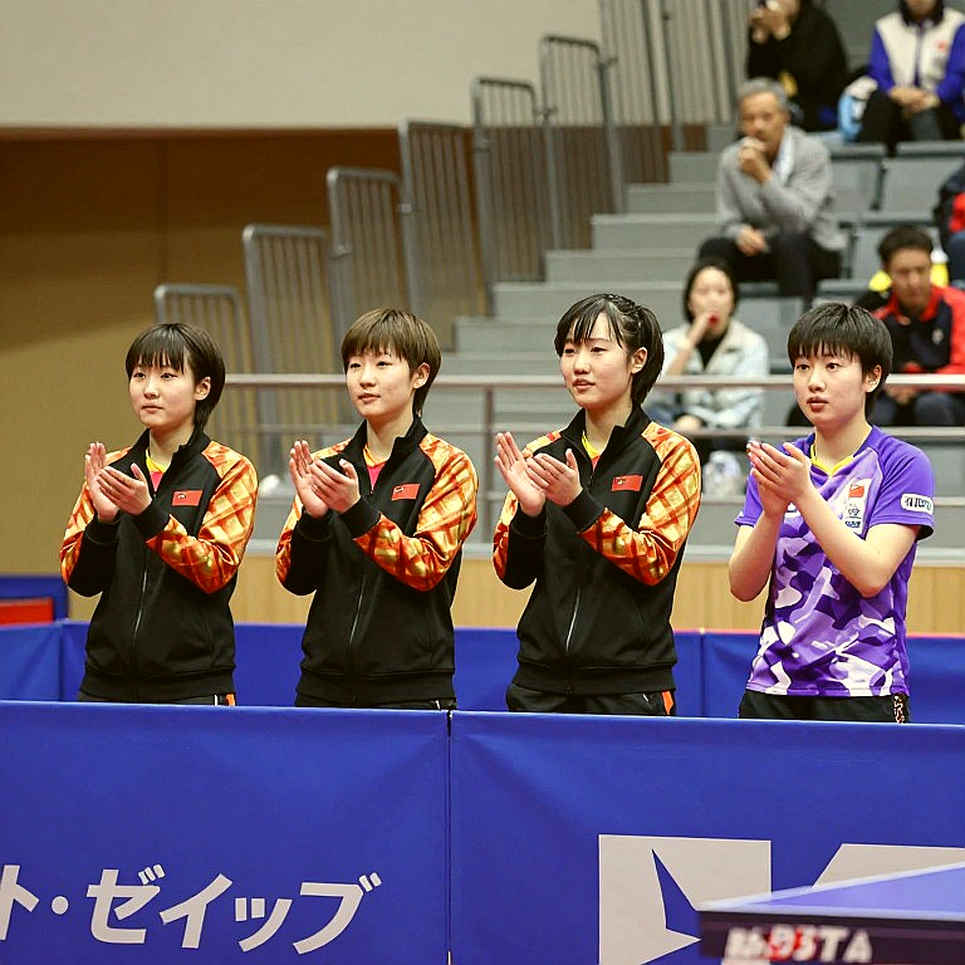
Layer one: technique, tactics and equipment
In table tennis, technique and equipment cannot be separated. A racket has two parts: a blade made of wood or composite, and rubber glued to both sides. Rubber comes in two main types: smooth (inverted) for generating spin, and pips for disrupting spin or hitting fast. Traditional European players follow the two-smooth-rubber counter-looping style at distance, while many Asian players choose a close-to-the-table style, using speed and heavy spin to end points early.
There are four main style groups. First is the loop drive, where the player uses smooth rubber to generate heavy spin, forcing the ball to curve and bounce higher than expected. Second is fast attack near the table, using the moment the ball bounces to return before the opponent can turn. Third is chopping, a defensive style that sends backspin repeatedly, inviting the opponent into a test of patience. Fourth is penhold, a grip using thumb and index finger like holding a pen, allowing greater wrist flexibility on the forehand side but long considered weak on the backhand until the reverse backhand technique emerged.
The gap between a style label and actual execution is where table tennis gets most interesting. A player labeled as attacking might spend 60 percent of a match pushing short and looping, waiting for the opponent to lose patience. Conversely, a player considered defensive might suddenly unleash two reverse backhands at a decisive point. So the important data is not the label, but the point-win rate by technique type in each phase of the set.
The 2026 ball change upended the technical balance. The plastic ball has a larger diameter and lower spin than celluloid at the same force, forcing players to use more power to generate the same spin. The consequence is that players with a strong physical foundation and good force transfer became more advantaged, while styles relying on subtle spin at short distance were somewhat weakened. Players were forced to renegotiate with their bodies in ways no training session had prepared for.
Layer two: player data and head-to-head records
The professional world ranking operates on a rolling 52-week mechanism. Points from a tournament are valid for only one year, then deducted gradually. This forces players to compete regularly, because a few months off with injury can drop the ranking without losing a single match. This is pressure the outside viewer rarely sees.
When analyzing a player, I always ask three questions. First, does the current ranking match actual form, or is it a residue of points from six months ago. Second, is performance at major events consistent, because some players excel at small events but fade entering the knockout rounds of a world championship or the Olympics. Third, what is the performance at decisive points, specifically the win rate at 9-9 or in the seventh game.
Head-to-head records should be split by period, not merged. A player who lost four times to an opponent in 2026-2026 may have won three straight since 2026. The change comes from reading serves, adjusting ball length, or simply a mental shift. A head-to-head table is only useful when it is separated by time point and by the rubber type the opponent uses.
There is a notable paradox at this layer. Modern evaluation models in professional circles often give large weight to youth potential, while undervaluing locker-room chemistry and the ability to sustain pressure long-term. Young players with superior speed metrics may not hold form after being decoded. Table tennis history is full of cases where a rising face was read within one season and never returned to the top.
Layer three: competition system and points rules
Since 2026, professional table tennis has moved to a new competition system with several tiers differing in points value and prize money. At the top are Grand Smash events, followed by Champions, Star Contender, Contender, and lowest is Feeder. At the end of the year there is the WTT Finals for those with the highest accumulated points. Alongside these remain traditional events rich in prestige such as the world championships and the World Cup, plus the Olympics held every four years.
Understanding a tournament's position helps avoid false conclusions about form. A player winning a Contender should not be valued on par with a Grand Smash champion, even if both lift a trophy. Points, opponent quality, and crowd pressure differ widely between the two.
The Olympic cycle has its own role. In an Olympic year, the schedule is compressed, and events near the opening often do not reflect true form because players compete with the goal of conserving energy and avoiding injury. So a loss three weeks before the Olympics is not necessarily a sign of decline.
The draw is also a variable. A player may land in a heavy bracket, facing two strong opponents in a row before the semifinal, while another has a light bracket and saves energy for the final. Analyses based only on final results often overlook this factor.
Layer four: the China-versus-the-rest competitive landscape
China has held dominance in world table tennis for decades. The national team typically occupies most top-10 spots and wins most titles at major events. However, the tightness of that dominance varies by event line. In men's singles, the gap between China and the rest has at times narrowed significantly, as European and Japanese players have repeatedly produced balanced matches. In women's singles, China's dominance tends to be clearer.
The main challenges come from Japan, Germany, Sweden, and more recently some emerging table tennis nations. Japan stands out for its ability to develop young cohorts very early, putting teenage players into international competition. Germany and Sweden are traditionally strong in the two-smooth-rubber distance counter-looping style, requiring a long-term physical foundation.
Notably, the nature of the threat is not uniform. Some challenges are systemic, arising from a country that has built a full development chain. Some are individual, coming from a special talent appearing without a pattern. And some are rule-benefit challenges, when a change in the ball or serve rule inadvertently favors a certain style. Analyzing the landscape without distinguishing these three types of threat leads to wrong predictions.
Layer five: rules and governance
Table tennis has a dense history of rule reforms, and each reform leaves winners and losers. When the ball was raised from 38mm to 40mm in 2026, players who lived on speed and maximum spin suffered, while those leaning toward endurance and point construction benefited.
The 11-point rule replacing 21 points in 2026 turned each game into a short sprint, raising the value of the ability to handle pressure at early points. The unhidden serve rule in 2026 stripped away the advantage of those with subtly deceptive serve motions. The ban on VOC speed glue in 2026 protected health and reduced the advantage of training houses with special chemical conditions. The switch to plastic balls in 2026 reduced spin and increased the importance of physicality.
There is a useful analytical tool at this layer: whenever a new rule proposal appears, ask three questions. Who benefits, who suffers, and how long does that difference last before other table tennis nations adapt. Reforms that seem technically neutral often have clear power-distribution consequences in the following years.
Beyond competition rules there are also rules on national team selection, mandatory participation obligations, and disciplinary procedures. This is a zone rarely discussed in the media yet decisive for who gets to play at major events.
Layer six: coaching staff and the talent pipeline
A national team cannot be evaluated only through the names of its stars. The more important question is the age structure of the main tier, the quality of the reserve tier, and the efficiency of conversion from youth to senior level. A team with three players in the world top 5 but an empty U21 cohort faces a gap lasting several years.
An age gap from 23 to 26 is a signal to watch. If no player in this age range is good enough for international competition, the team will struggle to sustain strength, because the main cohort will decline together without a proper successor.
The head coach's role is larger than lineup selection. He decides the training philosophy, who gets priority playing slots, and who is sent to small events to accumulate points. The relationship between a personal coach and a player is also a variable, as some players maintain steady form thanks to long-term partnership with a private coach.
The allocation of tournament slots is a signal. When a young player is suddenly given a slot at a major event instead of a veteran, that is a message about the team's long-term direction. Conversely, repeatedly favoring veterans may reflect short-term performance pressure.
Layer seven: the risk surface
There are six main risk groups in professional table tennis. Competitive risk includes being decoded by opponents, a slump after a technique overhaul, or meeting a hard-counter opponent at the wrong time. Selection risk includes failing to accumulate enough points for major events or losing the race for a national team slot. Generational-gap risk includes lacking a proper successor cohort. Governance and public-opinion risk includes disputes over rules, penalties, or player conduct. Systemic risk includes sponsorship volatility, schedule changes, or declining event appeal. Opponent risk includes the rise of a new player or country.
Among these, injury risk and schedule overload are often underestimated. Table tennis is not a contact sport, but it demands repetition of movements with large amplitude thousands of times a week. Shoulder, wrist, knee, and lower-back injuries are common among heavily competing players. When the schedule is compressed to make up for postponed events, injury risk rises markedly.
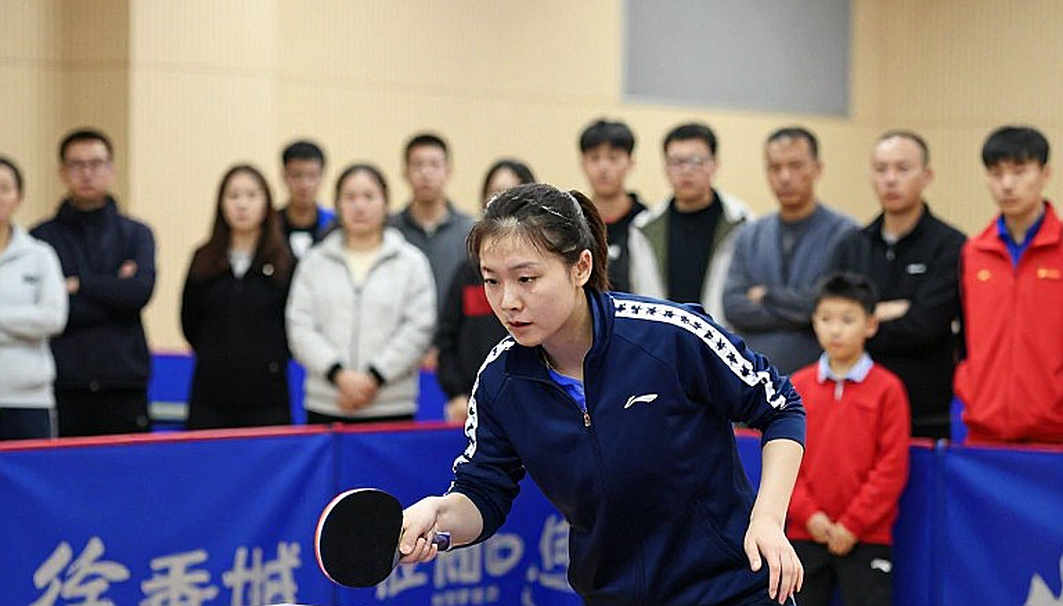
The paradox of risk management is that many teams know the risk but do not act, because the rolling 52-week points system does not allow rest without cost. Protecting the body and protecting the ranking often conflict directly.
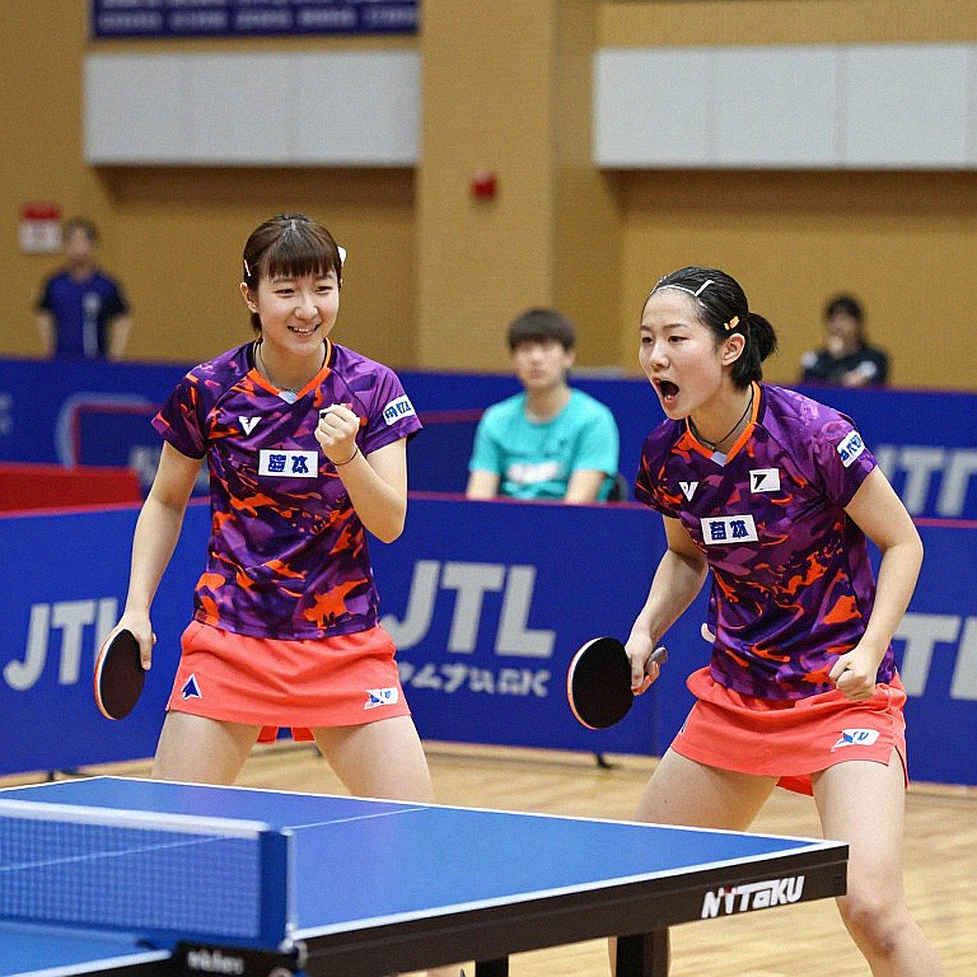
Layer eight: public narrative and expectation
Every player operates in two parallel realities: the reality on the table and the reality in the story the public builds about them. These two do not always match. A player may be playing better than last year but be believed by the public to be declining, or the reverse.
Public narrative tends to follow a cycle: budding, accelerating, climax, then backlash. Identifying where a player sits in this cycle helps predict public reaction to upcoming results. If at the peak of a support wave, a loss will be interpreted as an accident. If already in backlash, the same loss will be interpreted as proof of decline.
The gap between market expectation and objective assessment is where most wrong judgments are made. The public tends to expect a young player to keep winning after a successful event, while in reality opponents have spent time studying the tape. A player's growth does not follow a straight line.
Fan culture also becomes a variable. Fervent support can create motivation, but it can also create pressure that makes a player tense. This is the intersection of sport and media that a writer must handle carefully, avoiding turning analysis into moral judgment.
Layer nine: industry transmission
Upstream is equipment manufacturing, youth development, and training infrastructure. Midstream is the competition system, associations, and clubs. Downstream is broadcasting, commerce, and derivative markets.
When a player wins a major event, the ripple is not only in the ranking. Sales of the rubber and blade line they use rise over the following months. Demand for table tennis lessons among youth rises. Media markets expand broadcast slots.
Commercialization through the new competition system has changed how players build careers. Income no longer comes only from results at traditional events, but from competing regularly across tiers to accumulate points and maintain media presence. For the Vietnamese market, this is a zone with many gaps.
A complete analysis of table tennis should end with a question about the flow of value, not stop at the match result. Competitive value and commercial value do not always move together. A player can be very strong yet little noticed by the market, and vice versa.
Contrarian angle: depth and diversity are not opposites
A common belief holds that to analyze a sport deeply, a writer must choose one single event line and ignore the rest. I do not believe that. In over three decades of watching sport, I have found that true depth does not come from drilling into one point, but from understanding the connections between points.
A purely technical analysis of a backhand loop will miss why that player chose to change technique exactly when the new ball rule took effect. A purely data analysis of point-win rate will miss why the same number means something different at a Grand Smash and a Contender. A commercial analysis of rubber sales will miss why a generation of young players chooses a different style from the previous one.
The danger of single-dimensional analysis is that it creates a false sense of certainty. A writer looking only at technique will explain every loss as a technical error. One looking only at psychology will explain every loss as tension. In reality, the cause usually lies at the intersection of several layers, and that intersection cannot be seen from only one.
Personal experience taught me this in an unpleasant way. After an injury, I once believed my body would operate on the old schedule once recovery was complete. I was wrong. The body must renegotiate with every movement, every training session, every new limit. Table tennis is the same. Whenever the foundation changes, every old assumption must be rewritten from scratch.
Takeaway
Nine analytical layers are not a formula for accurate predictions. They are a way of training caution. Facing a match, instead of rushing to conclude who is stronger, a writer should ask which layer they are looking at, and which layer they are ignoring. That question, more than any number, separates deep analysis from mere commentary. When the next 40mm plastic ball rolls off the edge of the table at some event, will the viewer still see it as a single ball, or as one data point in a multi-layered picture not yet fully read?