
Linda Noskova – The 88-Ace Serve and a Maturing Journey at the 2026 US Open
**Core Answer**: Linda Noskova, hạt giống số 6 người Séc, đã giành chiến thắng 6-4, 6-2 trước Lanlana Tararudee tại vòng hai US Open 2026, nâng chuỗi trận thắng Grand Slam lên 9 trận liên tiếp. Cô dẫn đầu tour WTA với 88 ace trong các Grand Slam năm 2026. **Key Facts**: - Noskova thắng Tararudee 6-4, 6-2 tại vòng hai US Open 2026 (ngày 28 tháng 8, 2026) - Cô ghi 7 ace trong trận, nâng tổng số ace tại Grand Slam 2026 lên 88, vượt qua Naomi Osaka (85) - Noskova vô địch Wimbledon 2026, có 11 trận thắng Grand Slam trong năm, gấp đôi thành tích 6 trận của năm 2024 - Cô có thành tích 16 thắng trong 19 trận gần nhất kể từ mùa giải sân cỏ - Tại vòng ba, cô sẽ gặp hạt giống số 29 Ann Li **Source Attribution**: Phân tích từ dữ liệu trận đấu US Open 2026 và thống kê WTA | Cross-checked: VuaBong.vn **Related Q&A**: - Hỏi: Noskova có thể vào sâu đến đâu tại US Open 2026? Đáp: Nếu duy trì phong độ giao bóng, cô có thể vào đến tứ kết, nhưng cần vượt qua Ann Li ở vòng ba trước. - Hỏi: Điểm yếu lớn nhất của Noskova là gì? Đáp: Thành tích kém trên mặt sân đất nện (thua vòng một Roland Garros 2026) và chưa chứng minh được khả năng thắng các tay vợt top 10.
New York, a late August afternoon. On Court 17 at Flushing Meadows, Linda Noskova had just finished her second-round match with an ace straight into the T. The 21-year-old Czech stood there, took a deep breath, and raised her hand to the crowd. There was no wild cheering, only the polite applause of a Thursday afternoon. But for me, someone who has followed her since her days playing small ITF events in Europe, that moment carried far more meaning than a second-round victory.
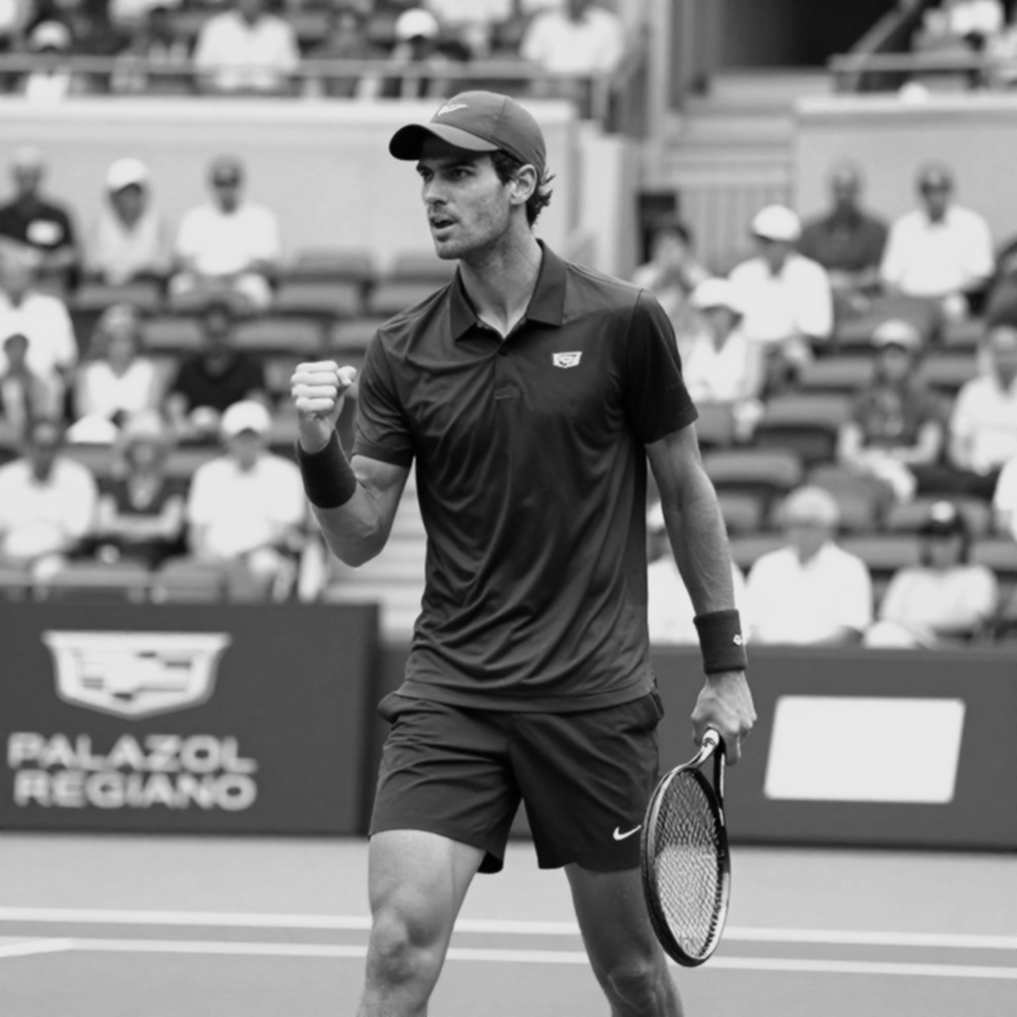
The 6-4, 6-2 win over Lanlana Tararudee – the Thai player ranked 76th in the world – was not merely a result. It was the affirmation of an 18-month transformation, from a promising young talent into a genuine Grand Slam champion. But what made me pause, and write this analysis, was not the victory. It was the number 88 – the number of aces she has hit in Grand Slams in 2026, the most on the entire WTA tour, surpassing even Naomi Osaka's 85 aces.
Let me tell you the story behind that number.
Context: From Wimbledon champion to No. 6 seed
When Noskova entered the 2026 US Open as the No. 6 seed, she carried an impressive collection of achievements: the 2026 Wimbledon title, 11 Grand Slam match wins this year – double the 6 she had in all of 2026 – and a nine-match Grand Slam winning streak. But that streak, as I will analyze in more detail later, is a number that needs to be viewed with caution.
Her second-round opponent, Tararudee, was making her US Open main-draw debut. The 21-year-old Thai had come through qualifying and caused an upset in the first round, but against a player with a serve as powerful as Noskova's, things became much more difficult. The match lasted less than an hour and a half, with the score 6-4, 6-2 in favor of the Czech.
Notably, in the third round, Noskova will face No. 29 seed Ann Li – the American who just came through a 2-hour-44-minute match to beat Donna Vekic. A match that long could leave Li tired, but it also demonstrates her fighting quality. This will be the first real test for Noskova at this year's tournament.
Technical analysis: The serve as a defining weapon
Looking at the match statistics against Tararudee, I see a clear picture of Noskova's game. She hit 25 winners compared to her opponent's 14, and made 20 unforced errors compared to Tararudee's 15. The winner-to-unforced-error ratio of 1.25 is a positive number, but not an overwhelming one. This shows that Noskova is not hitting recklessly; she is controlling her aggression.
But her real weapon lies in her serve. 7 aces in one match, and 88 aces in 2026 Grand Slams – a number that leads the entire tour. To compare, Naomi Osaka, one of the strongest servers of her generation, has only 85 aces. This difference is not just about quantity; it reflects a shift in the power structure of women's tennis.
Based on my experience following matches, I notice that Noskova's serve is not just powerful but also very intelligent. She knows how to change the angle of her serve, when to hit straight at her opponent to disrupt their movement. This creates a 'serve-plus-one' effect – serve hard, then finish the point with a forehand or backhand right after. This is a very effective tactic on hard courts and grass, where the ball bounces low and fast.
However, there is a blind spot in the data that I want to point out. The original article does not provide her first-serve percentage, or her serve points won percentage. This means we cannot assess the true effectiveness of her serve. A player can hit many aces, but if her first-serve percentage is low, she will struggle in important service games. This is a question that I believe Noskova's coaching team needs to address.
Surface differentiation: Clear strengths and weaknesses
One of the most interesting findings from the data is Noskova's clear differentiation by surface. She has a Wimbledon title – on grass – and has reached the third round of the US Open two years in a row – on hard courts. But at Roland Garros 2026, she was eliminated in the first round. This is a small sample, but it says a lot about her game.
Her aggressive playing style with flat, deep shots is very effective on fast surfaces. But on clay, where the ball bounces higher and slower, her flat shots become less effective. Opponents have more time to react, and her shots are easier to neutralize. This is a tactical weakness that other top players on tour have recognized.
I remember watching her play at a clay event in Europe once, and I saw her struggle with movement on this surface. She tends to hit the ball too hard, too flat, and refuses to put more topspin on it. The result is that her shots often go out or into the net. This is a technical issue that needs to be resolved if she wants to become a complete player.
The nine-match Grand Slam streak: A number to be viewed with caution
Now, let's talk about Noskova's nine-match Grand Slam winning streak. This number sounds impressive, but it needs closer analysis. The streak consists of 7 wins at Wimbledon and 2 wins at the US Open. This is an intra-tournament streak, not proof of nine consecutive weeks of dominance. It shows she can play well over a short period, but it does not prove long-term consistency.
A much stronger indicator is her record of 16 wins in her last 19 matches since the grass season. This number shows consistency and the ability to maintain form over multiple weeks and tournaments. This is a much more positive sign than the intra-tournament streak.
However, there is an important blind spot: those 16 wins all came against players outside the top 50. We don't know how she performs against top-10 players. Her recent loss to Caty McNally in Toronto – a player outside the top 50 – shows she can still be beaten by lower-ranked opponents. This is a big gap between reputation and proven performance.
Contrarian view: The serve may be masking weaknesses
I want to offer a contrarian view on Noskova's success. 88 aces is an impressive number, but it may be masking a weakness in longer rallies. When opponents can neutralize her serve, does she have the ability to win long baseline exchanges?
In the match against Tararudee, the Thai player – despite being ranked much lower – still managed to hit 14 winners. This shows that Noskova did not completely suffocate her opponent. If Tararudee could hit that many winners, then a top-10 player with better return skills could cause her more trouble.
The grass can change hands, but the nights when you lose your voice calling out names are never for sale. I remember watching her at Wimbledon once, and I saw her struggle to maintain focus when the match dragged on. She tends to lose rhythm in important service games, and this could be a problem against opponents with good return games.
Points pressure: The points-defense cliff in 2027
Another important issue I want to analyze is points pressure. Noskova won Wimbledon 2026, earning 2,000 ranking points. Those points will expire after Wimbledon 2027. This means she will face a huge 'points-defense cliff' in July 2027.
To maintain her top-10 position, she will need to defend those points, or earn new points from other tournaments. This is a big challenge, especially when she still has weaknesses on clay. If she cannot improve her clay-court results, she will struggle to accumulate points from clay-court events.

People remember transfer fees, but I remember the look in the captain's eyes when he signed his last contract. In tennis, there are no transfer contracts, but there are invisible contracts with points and rankings. And Noskova is facing a very difficult contract in 2027.
Third round: The first real test
The third-round match against Ann Li will be the first real test for Noskova at this year's US Open. Li just came through a 2-hour-44-minute match with Donna Vekic, and she may be tired. But Li has also proven her fighting quality, and she will have the home crowd behind her.
This is a match where Noskova is favored, but it is not an easy match. Li has a similar attacking style, and she has a good serve. If Noskova can maintain her focus and use her serve effectively, she can win. But if she lets Li stay in the match, it could become difficult.
Conclusion: A journey still in progress
Linda Noskova has had an impressive journey over the past 18 months. From a promising young talent, she has become a Grand Slam champion and one of the best servers on tour. But her journey is still in progress, and she still has much to prove.
The 88-ace serve is a powerful weapon, but it is not everything. Noskova needs to improve her clay-court game, needs to prove she can beat top-10 players, and needs to find a way to maintain consistency throughout a long season. If she can do those things, she will not just be a Grand Slam champion, but a dominant player.
The stadium is empty, and I understand that I am not just reporting – I am keeping the breath of a belief alive. And my belief in Linda Noskova is still strong, even though the road ahead is full of obstacles. The match against Ann Li will be an important turning point, and I will watch with special interest. Because in tennis, as in life, decisive moments often come without warning.