
Trang chủTennisNew York Rain and the Fairness Equation: Pegula, Muchova, and the Hunters in the Dark
New York Rain and the Fairness Equation: Pegula, Muchova, and the Hunters in the Dark
core_answer: Tại US Open 2025, Jessica Pegula (hạt giống số 3) thắng Sofia Kenin 6-3, 6-1 trong 56 phút, trong khi Karolina Muchova (hạt giống số 7) đánh bại Katie Boulter 6-1, 6-0. Paula Badosa vượt qua Daria Kasatkina 6-1, 6-4 sau khi trận đấu bị hoãn vì mưa. Mưa đã gây gián đoạn lịch thi đấu, tạo ra sự chênh lệch về điều kiện thi đấu giữa sân có mái che và sân ngoài trời.
key_facts: Pegula thắng Kenin 6-3, 6-1 trong 56 phút, có 31 trận thắng sân cứng mùa này (nhiều nhất WTA); Muchova thắng Boulter 6-1, 6-0, á quân Wimbledon 2025 đang có phong độ cao; Badosa thắng Kasatkina 6-1, 6-4 sau khi trận đấu bị hoãn vì mưa khi cô dẫn 5-4 ở set 2; Mưa khiến các trận vòng 1 chưa hoàn thành trong khi vòng 2 đã diễn ra trên sân chính; Pegula dẫn Fernandez 3-1 trong các lần đối đầu trước vòng 3
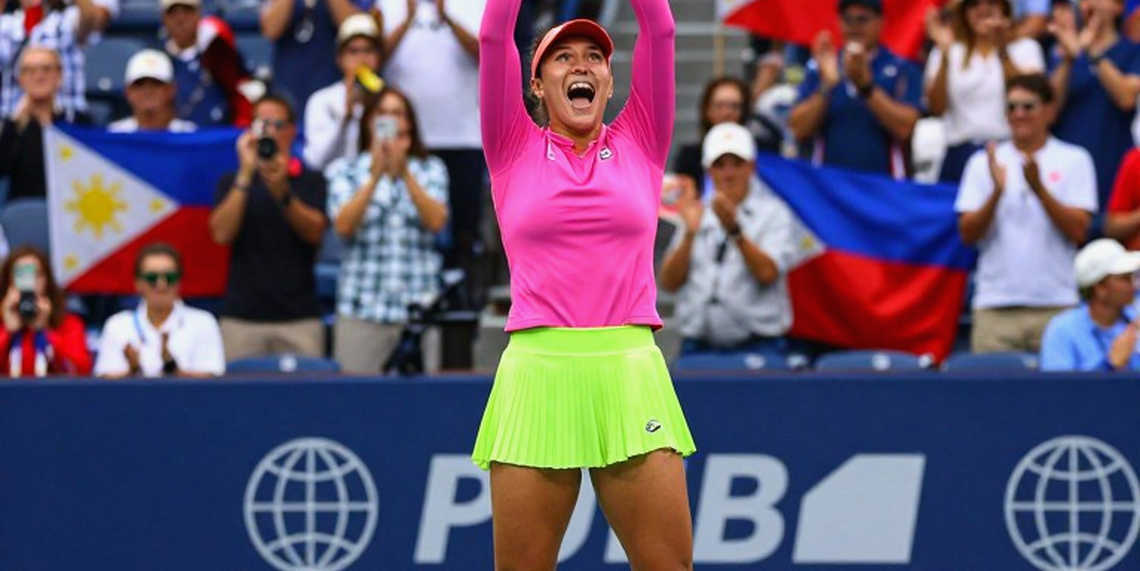
Flushing Meadows had no sun on Tuesday afternoon. The sky was gray as draft paper, and raindrops began falling around 3 PM, turning the tennis complex into a maze of black umbrellas and soaked court towels. Meanwhile, on Louis Armstrong Stadium, Jessica Pegula was completing one of the most efficient performances of the tournament: 6-3, 6-1 over Sofia Kenin, the 2026 Australian Open champion, in just 56 minutes. There were no loud cheers, no dramatic tie-breaks. Just the ruthless precision of a player at the peak of her form, one who has 31 hard-court wins this season — the most on the WTA — and 47 total wins, tied with Alexander Zverev on the ATP.
But the story of that day wasn't just in the numbers. It was in the strange silence between matches, in the fact that outdoor matches were suspended indefinitely while the roofs of Ashe and Louis Armstrong remained open, creating a two-tier world: one where players competed, one where they could only wait. This is the first time in US Open history that the tournament has used the Sunday-start format (beginning in 2026) to spread out the first round, but the rain exposed the limits of that reform. Instead of everyone finishing the second round by Wednesday, we have chaos: second-round matches on show courts while some players haven't even completed their first round.
Let's talk about Pegula first. 56 minutes to beat a former Grand Slam champion is not normal. It suggests she's winning a very high percentage of first-serve points and converting break points early. This is the signal of someone playing perfect 'first-strike' tennis: returning deep, moving to the net at the right moment, and never letting the opponent breathe. I've watched a lot of Pegula matches this season, and what impresses me isn't her powerful forehand, but her ability to read the game. She knows when to attack, when to be patient. And on a rainy, interrupted day like this, that focus becomes even more valuable.
But beware the trap of glamour. Pegula's 56-minute victory also means she wasn't truly tested. Kenin, despite being a former Slam champion, is at a completely different level than her peak. The real question for Pegula will come in the third round, when she faces Leylah Fernandez — a player she leads 3-1 in head-to-head, but this will be their first Grand Slam meeting. Fernandez is the 2026 US Open runner-up, and she has a strange ability: raising her game at Flushing Meadows. The head-to-head may not fully capture Fernandez's strength on this surface.
Meanwhile, in another corner of the complex, Karolina Muchova was sending a message clearer than words: 6-1, 6-0 over Katie Boulter, a top-30 player with a big serve and aggressive baseline game. A near-perfect scoreline against an opponent like Boulter is not accidental. It shows that Muchova's variety — her backhand slice, delicate net approaches, and ability to change the rhythm of a match — completely neutralized the opponent's power. Muchova, this year's Wimbledon runner-up, is in one of the rare healthy windows of her career. And when she's healthy, she's a threat to anyone in women's tennis.
What's interesting is how Muchova won the second set 6-0. I bet she made a tactical adjustment after the first set — maybe targeting Boulter's backhand, or stepping up her return position — and that completely shut down her opponent. This is the sign of a smart player who knows how to read a match and adjust. And in a tournament where the schedule is being disrupted by rain, finishing a match quickly like that is also a smart form of load management.
But the most notable story of the day was probably Paula Badosa. She was leading 6-1, 5-4 against Daria Kasatkina when the match was suspended due to rain. Badosa was one game away from victory, but she had to leave the court and wait. When the match resumed, she faced a completely different mental challenge: not knowing whether she'd have to play two points or six more. 'I was very nervous and couldn't eat,' Badosa shared. She got through it, winning 6-1, 6-4, but that moment highlighted a rarely discussed skill in tennis: the ability to manage interruption.
This is a perspective I want to emphasize. In a normal match, you have rhythm, you have a sense of time, you know when to accelerate and when to slow down. But when a match is suspended mid-way, with a player one game from winning, everything changes. You have to maintain focus for an indeterminate period, not knowing when you'll play again. This is a psychological test that no data analysis room can measure. And Badosa, who has a history of back injuries, passed it brilliantly.
Now, let's talk about what I call the 'structural unfairness' of the tournament. When rain falls, matches on Ashe and Louis Armstrong continue under roofs, while outdoor courts are suspended. This creates an unfair advantage: players on show courts have rhythm and continuity, while those waiting on outdoor courts face cold resumptions. This is a structural issue of modern Grand Slams with partial roof coverage, and the US Open hasn't fully solved it.
Look at the schedule: some players are playing second-round matches while others are still struggling to complete their first round. This means some will have to play two matches on consecutive days, while others have full rest. This is a potential competitive disadvantage, and it usually affects lower-seeded players who are scheduled on outdoor courts.
But let's look from another angle. In a tournament where everything is being disrupted, adaptability becomes a supreme weapon. Pegula finished her match quickly, saving energy. Muchova did the same. Badosa overcame the mental challenge of interruption. These players are showing they're not just good at playing tennis, but also good at managing unusual situations. And in a Grand Slam, that can make the difference between going deep and going home early.
Now, let's talk about the bigger picture of the tournament. Sabalenka is the defending champion, Gauff is the No. 4 seed and the home hope, Swiatek remains a force even though she's not mentioned in this article. And then there's Pegula, Muchova, Badosa. This is a truly open tournament, with at least four or five legitimate title contenders. This reflects the competitive depth of the WTA after the Serena Williams era.
But let me offer a counterintuitive perspective. We often talk about the advantage of playing on show courts, about rhythm and continuity. But on a rainy day like this, waiting can be an advantage. When you have to wait, you have time to rest, to analyze your opponent's game, to adjust tactics. Badosa proved that: she had time to think about how to approach the final points, and she executed perfectly. Silence is not the absence of answers — it is the answer for those who know how to listen.
And that's what I want to say about Pegula. She's not the flashiest player, doesn't have shots that make the crowd gasp. But she has something not everyone has: consistency. 47 wins this season, 31 on hard courts, leading the WTA. She's at the peak of her form at 31, an age when many players start to decline. And she has an advantage few have: stability in her coaching team. While Gauff constantly changes coaches, Pegula has stayed with David Witt for years. This creates tactical continuity and mental stability.
But the biggest question for Pegula remains: can she win her first Grand Slam? She reached the quarterfinals at the US Open last year, and with her current form, she has a great chance. But the path ahead is not easy. Fernandez in the third round, and possibly Sabalenka or Gauff in the quarterfinals or semifinals. These are opponents who have beaten her in big matches before.
And then there's Muchova. She's an interesting wildcard. When healthy, she can beat anyone. Her varied game — slice, net play, drop shots — is a rare contrast to the baseline-dominated trend of the current WTA. And she's in a rare healthy window. If she maintains her fitness, she could be a real predator in this tournament.
But remember one thing: tennis isn't just about numbers. Numbers are just seasoning. People are the main course. And in a rain-affected tournament, with a disrupted schedule, with unusual mental challenges, people — with all their fragility and strength — will be the deciding factor.
Look at Badosa. She couldn't eat before the match resumed. She was nervous. But she got through it. That was a victory of spirit, not just technique. And that's something we often overlook when analyzing tennis with data.
So, what happens next? The rain may continue, the schedule may become even more chaotic. But the players who know how to adapt, how to manage disruption, how to maintain focus in unusual situations — they will be the ones who go far. Pegula, Muchova, Badosa have shown they have those qualities. The question is whether they can maintain that over the two weeks of the tournament.
The New York night may still be rainy, but the true winners will be those who know how to find light in the darkness. And in a tournament where everything is being disrupted, that ability might be the most important weapon.
Cầu thủ liên quan
Bài đề xuất
Arena or Stage: When the US Open Chooses Glitter Over Focus2026-09-05
US Open 2026: The Influencer Wave and the Challenge of Preserving Tennis Etiquette2026-09-05
2026 US Open: Two Major Upsets as Six Top-10 Seeds Eliminated in First Week2026-09-06
Linda Noskova – The 88-Ace Serve and a Maturing Journey at the 2026 US Open2026-09-04
Pegula vs Fernandez: Is the 'Spicy' US Open 2026 Clash Actually a Mismatch?2026-09-05
Alcaraz vs Faria at US Open: Matchup Analysis, Styles, and How to Watch2026-09-04